A 10-minute post-ride stretching routine for beginner cyclists
Here's the seven-stretch routine I'll do after every ride while I get back into cycling. It takes about ten minutes and covers the muscles that cycling tightens most.
How to do the routine
- Stretch after the ride, while your muscles are still warm. Mayo Clinic advises against stretching cold muscles and says that after a workout is a good time to stretch.
- Hold each stretch for about 30 seconds per side. In a problem area you can hold it for around 60 seconds.
- Feel tension, never pain, and don't bounce. Use smooth, controlled movements.
- Be consistent. Even 5 to 10 minutes, 2 to 3 times a week, helps, and doing it after every ride makes it a habit. In each illustration, orange shading shows where you should feel the stretch and green arrows show which way to move.
1. Calf stretch against a wall
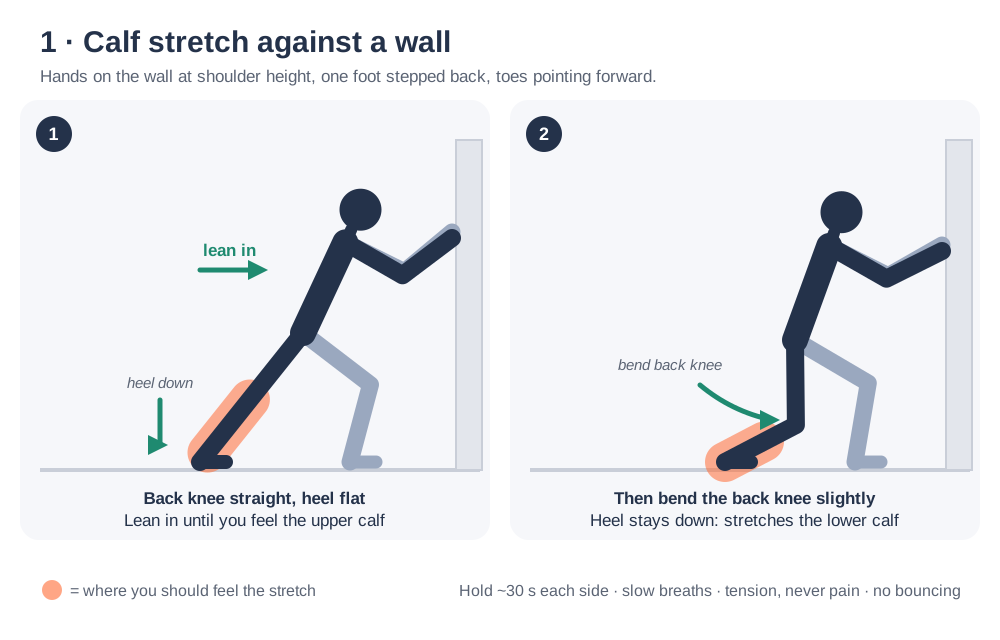
Why: Your calves push down on the pedals with every stroke and stay in a shortened position for the whole ride, so tension builds up in them and the Achilles tendon. With the back knee straight you stretch the upper calf. Bending the back knee shifts the stretch to the lower calf.
How: Put your hands on the wall at shoulder height and step one foot back. Keep the back heel flat and lean in. Then bend the back knee slightly while keeping the heel down.
2. Standing quad stretch
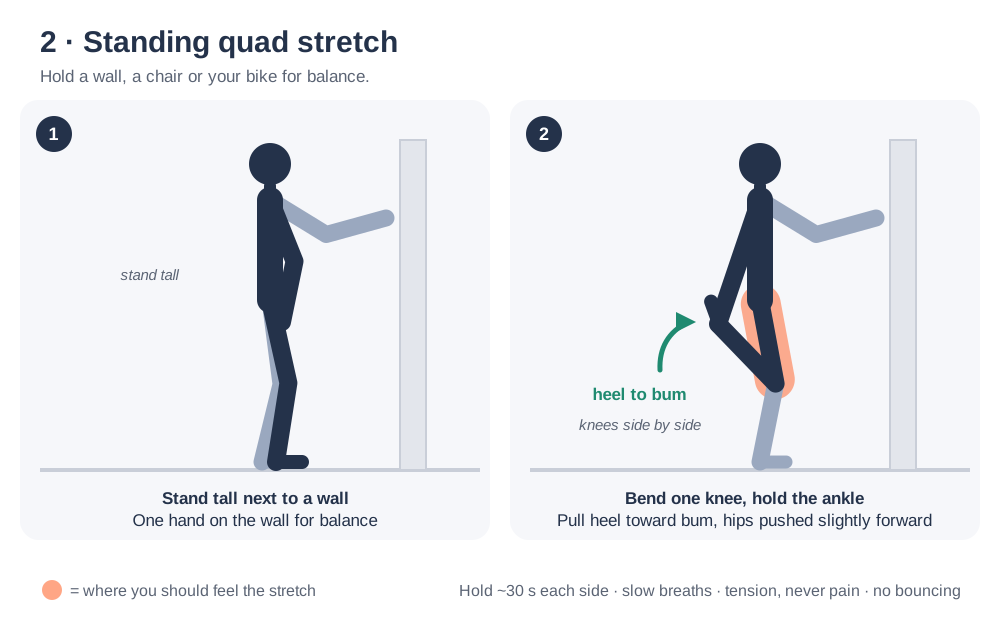
Why: The quadriceps at the front of your thighs do most of the work when you push the pedals, so they are the muscles that tighten most from the repetitive pedalling.
How: Hold a wall, a chair or your bike for balance. Bend one knee, hold the ankle and pull the heel toward your bum. Keep your knees side by side and tighten your stomach muscles.
3. Kneeling hip flexor stretch
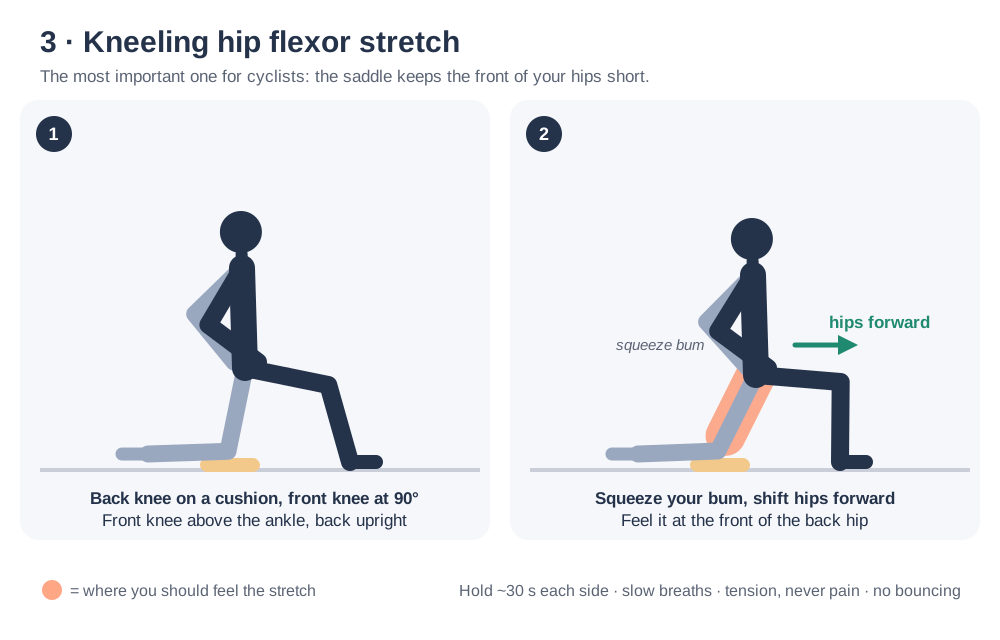
Why: Your hips stay bent the whole time you sit on the saddle, which keeps the hip flexors at the front of your hips short. This is the most important stretch in the routine for cyclists.
How: Kneel with your back knee on a cushion or folded towel and your front knee at 90°, directly above the ankle. Squeeze your bum and shift your hips forward until you feel the stretch at the front of the back hip.
4. Lying hamstring stretch with a towel
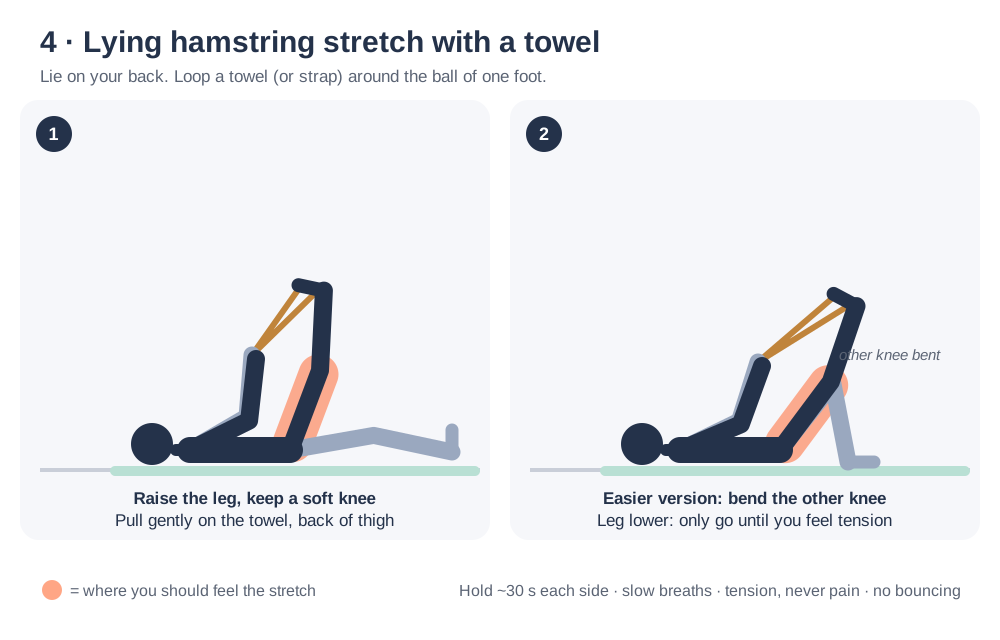
Why: The hamstrings at the back of your thighs work through the whole pedal stroke, and cyclists often end up tighter on one side than the other. Lying on your back keeps your lower back supported, which makes this version easy on beginners.
How: Lie on your back and loop a towel or strap around the ball of one foot. Raise the leg with a soft knee and pull gently on the towel. For an easier version, bend the other knee and keep the foot flat on the floor.
5. Figure-4 glute stretch
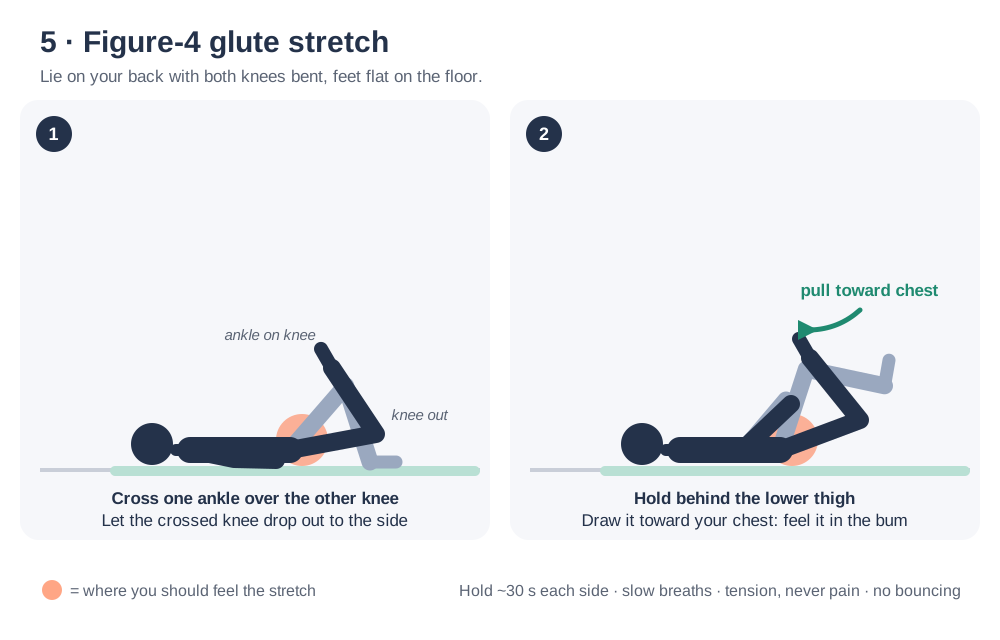
Why: This stretch targets the glutes and the piriformis, a small muscle deep in the hip. It eases the deep ache around the hips that many cyclists feel after riding.
How: Lie on your back with both knees bent. Cross one ankle over the opposite knee and let the crossed knee drop out to the side. To go deeper, hold behind the lower thigh and draw it toward your chest.
6. Child's pose
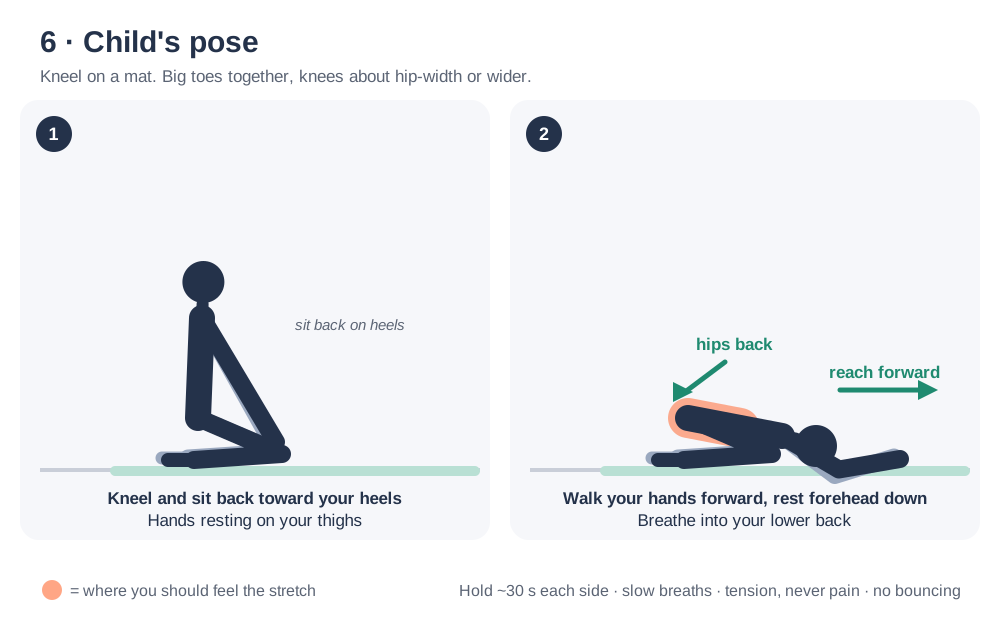
Why: Leaning on the handlebars with your back bent forward builds tension in your lower back, lats and hips. Child's pose lets all three relax at once.
How: Kneel with your big toes together and your knees apart. Sit back toward your heels, walk your hands forward and rest your forehead on the floor. Breathe slowly into your lower back.
7. Doorway chest opener
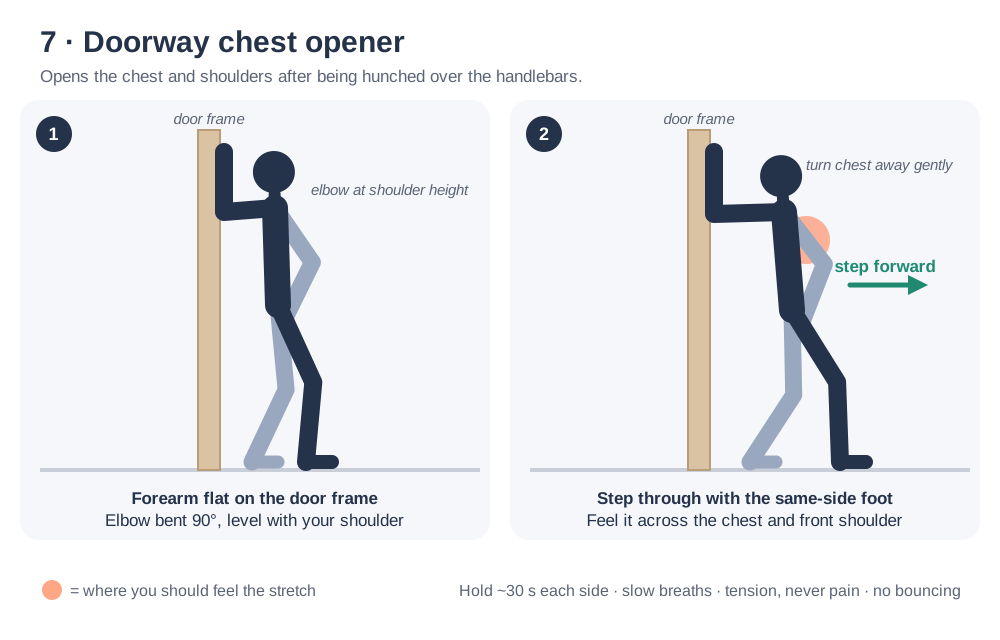
Why: Your chest and shoulders support you on the bars and roll forward throughout the ride. This stretch opens them back up and helps undo the hunched riding position.
How: Place your forearm flat on a door frame with your elbow bent 90° at shoulder height. Step through with the same-side foot and turn your chest away gently.
Sources
- Mayo Clinic, Stretching: Focus on flexibility: stretch warm muscles, hold for about 30 seconds (or around 60 for problem areas), don't bounce, feel tension rather than pain, and stretch 2 to 3 times a week.
- Mayo Clinic, A guide to basic stretches: how to do the calf, hamstring, quadriceps and kneeling hip flexor stretches, with a cushion under the knee.
- Rouvy, Post-ride stretches for cyclists: why each of these seven stretches matters for cyclists.
- BikeRadar, 8 stretches to improve your flexibility and cycling performance: calf stretch with straight and bent knee variations, and the seated glute and hip opener. Illustrations: original drawings made for this post.